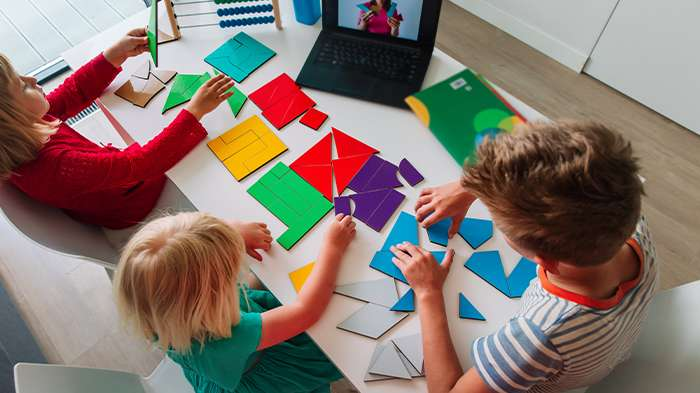
Spatial awareness—the ability to FCM99 understand and remember the relative locations of objects in an environment—plays a crucial role in our everyday lives. Whether navigating through a crowded room, reading maps, or packing a suitcase, spatial awareness is essential for problem-solving, decision-making, and coordination. Fortunately, you don’t need to be an architect or a designer to improve this skill. Many games and activities can effectively boost spatial awareness, making it easier to visualize, manipulate, and organize objects in space.
In this article, we will explore several games that enhance spatial awareness. From puzzles to video games, these activities can help sharpen your brain and improve your ability to visualize and navigate through both virtual and real spaces. Whether you’re a teen, an adult, or a senior, incorporating these fun games into your routine can improve your cognitive abilities and enrich your daily life.
- Jigsaw Puzzles: Building Mental Maps
Jigsaw puzzles are one of the best traditional games for enhancing spatial awareness. When working on a puzzle, your brain must identify and fit pieces based on their shape and image, requiring both visual and tactile recognition. You need to visualize how pieces will fit together even before physically trying them, strengthening your ability to create mental representations of spaces.
How Jigsaw Puzzles Enhance Spatial Awareness:
Visualizing Pieces in 3D: As you work with flat pieces, your brain learns to manipulate shapes and understand how they fit into a larger space.
Pattern Recognition: Identifying the shape and edges of puzzle pieces helps your brain recognize patterns and spatial relations.
Problem-Solving: Jigsaw puzzles require you to use trial and error, fostering decision-making skills and improving your ability to visualize different configurations.
Tip:
Try using more complex puzzles with irregular shapes and varying images to challenge your spatial reasoning abilities further.
- Tetris: Classic Video Game for 3D Thinking
Tetris is a video game classic that is often cited for its ability to improve spatial skills. In Tetris, players must rotate and manipulate falling shapes (called tetrominoes) to fit them together in a grid. The game requires quick thinking, anticipation, and the ability to visualize shapes in 3D space, as players must figure out how the pieces will fit into gaps before they hit the bottom.
How Tetris Enhances Spatial Awareness:
Mental Rotation: The game strengthens the ability to mentally rotate shapes and predict how they will fit together.
Quick Decision-Making: Players need to assess how pieces interact with the grid and make split-second decisions about where to place them.
Coordination and Focus: Tetris sharpens hand-eye coordination and visual attention, which are essential components of spatial awareness.
Tip:
Increase the difficulty level or play with faster settings to make the game more challenging and further enhance your spatial reasoning.
- Minecraft: Build and Explore Virtual Worlds
Minecraft is a popular sandbox video game that encourages creativity and spatial reasoning. In Minecraft, players can explore and build in a 3D world using blocks to create structures, landscapes, and entire cities. The game involves a great deal of planning, as players need to visualize and organize spaces in a virtual environment, and decide where to place objects for optimal construction and design.
How Minecraft Enhances Spatial Awareness:
3D Visualization: Minecraft encourages players to think in three dimensions, whether they are building complex structures or exploring the world.
Planning and Organization: The game teaches players how to organize and arrange objects in space, helping develop spatial memory and layout planning.
Geometric Thinking: Minecraft involves the manipulation of basic geometric shapes, improving your ability to think geometrically and solve spatial problems.
Tip:
Experiment with building larger, more complex structures, or take on challenges like designing specific layouts or spaces in the game, to push your spatial skills to the next level.
- Blindfolded Puzzles: Enhance Your Mental Mapping
Blindfolded puzzles, whether physical or virtual, are a great way to exercise spatial awareness without relying on your sight. In this variation, players are required to complete puzzles or solve tasks while blindfolded or with reduced visibility. This forces the brain to rely more on mental imagery and tactile feedback to understand the positions and movements of objects.
Tip:
Start with simple puzzles or tasks and gradually increase the complexity as you become more comfortable with relying on mental maps and tactile feedback.
- Board Games like Labyrinth: Navigate Through Spaces
Board games that require players to navigate through a constantly changing space also enhance spatial awareness. Labyrinth, for instance, is a popular strategy board game where players navigate through a maze-like grid and try to reach specific targets. The key to winning is being able to visualize the layout of the maze and anticipate the movement of pathways.
How Labyrinth Enhances Spatial Awareness:
Pathfinding: Players need to think ahead and visualize how to move through the maze, helping improve their ability to mentally map spaces.
Planning and Strategy: The game involves planning movements and anticipating future moves, which helps strengthen strategic spatial thinking.
Problem-Solving: Labyrinth challenges players to navigate obstacles and find the best path, encouraging mental flexibility and adaptive thinking.
Tip:
Play with friends or family to add a social element and challenge your ability to think in different directions and manage spatial obstacles under pressure.
- Origami: Fold Your Way to Spatial Understanding
Origami, the Japanese art of paper folding, requires incredible spatial reasoning. When creating intricate designs with paper, you need to visualize the final product and how the folds come together to form a specific shape. The process involves detailed step-by-step folding and rotating, which helps develop mental rotation and spatial visualization skills.
How Origami Enhances Spatial Awareness:
Visualizing Shapes: The process of folding paper to create shapes enhances your ability to visualize and manipulate objects in space.
Attention to Detail: Origami requires precision, as even the smallest misstep can throw off the final design, improving attention to detail.
Spatial Problem-Solving: Creating complex shapes through folding challenges your spatial problem-solving abilities, encouraging a deeper understanding of geometry.
Tip:
Start with basic designs and gradually try more complex ones as your spatial awareness and understanding of geometric shapes improve.
- Physical Games: Balance and Movement Activities
Physical activities, such as yoga, dance, and sports like basketball or soccer, are great for improving spatial awareness. These games engage both the mind and body, requiring players to be aware of their surroundings, manage movement, and orient themselves in space.
How Physical Games Enhance Spatial Awareness:
Body Awareness: Physical games promote proprioception, the ability to understand and sense the position of your body in space, which is a key component of spatial awareness.
Coordination: Activities like dancing and sports require you to coordinate movements and maintain awareness of where you are in relation to other objects and people.
Spatial Navigation: Navigating through physical environments helps improve the ability to perceive space, distance, and depth.
Tip:
Engage in activities that require spatial thinking, such as dancing, rock climbing, or basketball, to strengthen your sense of direction and spatial awareness.
Conclusion: Boost Your Spatial Awareness with Fun Games
Spatial awareness is a crucial skill that impacts everything from daily navigation to complex problem-solving. Fortunately, improving your spatial reasoning doesn’t have to be dull. Jigsaw puzzles, Tetris, Minecraft, board games, and even physical activities are fun, engaging ways to sharpen your mind and improve your ability to navigate both the physical world and virtual spaces.
 Site Title